Metal Gates in St. Louis Park, MN
Driveway gates, walk gates, security gates and repairs for St. Louis Park properties — one housing era, one set of constraints, and a lot of salted road.
St. Paul Elite Metal Gates is your local resource for metal gates, driveway gates, automatic gate operators and ornamental ironwork throughout St. Louis Park and Hennepin County. We work with experienced gate fabricators and installers who build for a climate that swings 120 degrees between July and January.
St. Louis Park has the most concentrated building period of any city on this list: 60 percent of its homes went up between the late 1940s and the early 1950s, during a stretch when 6.9 people were moving into the city every day. There was a Depression-era building surge before that, and redevelopment has come since, but the bulk of the housing stock is one narrow window.
One window means one set of constraints, repeated across the city. Single-width drives, garages close to the street, mature boulevard trees, and lot widths that were laid out before a household kept two or three cars. A gate here is nearly always a question of what will physically fit rather than what would look best.
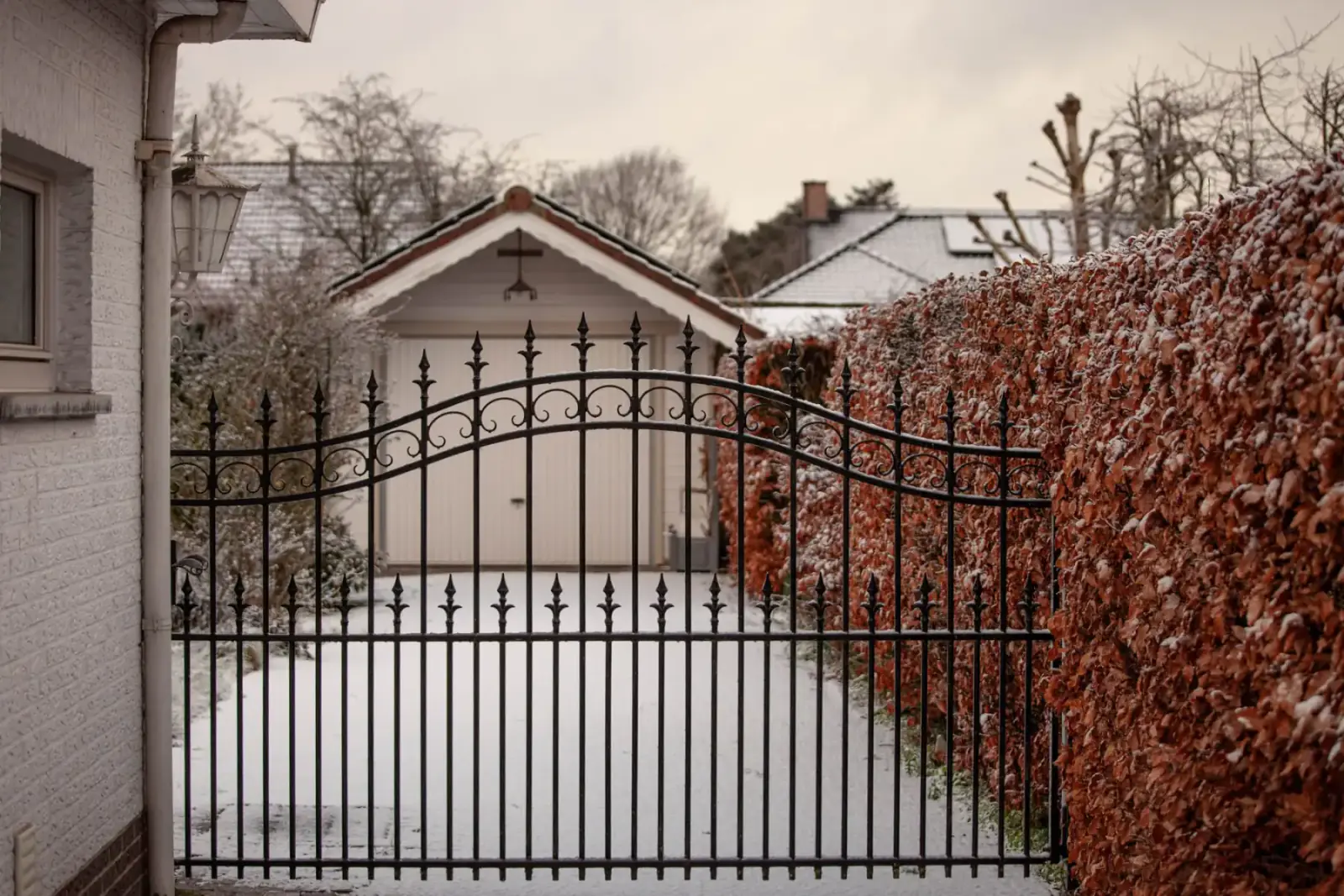
Custom Metal Gates in St. Louis Park, MN
Each service below has its own page with the full specification detail. These are the ones that come up most often on St. Louis Park properties, residential and commercial.
Custom Metal Gates
Built to the measured opening in steel, aluminum or true wrought iron, with the material and coating specified before the drawing.
Custom Metal Gates in St. Louis ParkDriveway Gates
Single and double leaves sized to the clear opening and the grade across it. Slide versus swing gets decided on site, not by preference.
Driveway Gates in St. Louis ParkAutomatic & Electric Gates
Operators matched to leaf weight and real cycle counts, with remotes, keypads, exit detection and battery backup.
Automatic & Electric Gates in St. Louis ParkWrought Iron Gates
Ornamental iron and forged detail, including an honest answer about which metal you are actually buying.
Wrought Iron Gates in St. Louis ParkSliding Gates
V-track and cantilever slide gates for driveways with no room to swing. Cantilever carries the leaf with no ground track to ice up.
Sliding Gates in St. Louis ParkSwing Gates
Manual or automatic, braced against the sag that takes down every long leaf built without a latch-side diagonal.
Swing Gates in St. Louis ParkPedestrian Gates
Front entry, side yard and garden walk gates, hung with the clearance to still swing over packed snow in February.
Pedestrian Gates in St. Louis ParkSecurity Gates
Specified against how gates actually get defeated: reach-through to the latch, climbing, and lifting the leaf off its hinges.
Security Gates in St. Louis ParkMetal Gate Repair
Sagging leaves, gates off track, seized rollers, bent frames and latches that will not catch. Diagnosis before parts.
Metal Gate Repair in St. Louis ParkGate Opener Installation
Slide and swing operators installed, wired and commissioned — including the power route, usually the biggest number on the quote.
Gate Opener Installation in St. Louis ParkGate Opener & Motor Repair
Most dead openers turn out to be a drifted limit, a blocked photo eye or a gate that simply got harder to move.
Gate Opener & Motor Repair in St. Louis ParkAccess Control Systems
Keypads, fobs, intercom and smartphone entry, built around how you revoke one person's access rather than how the pedestal looks.
Access Control Systems in St. Louis ParkCommercial Metal Gates
Entrance, yard and perimeter gates specified against cycle count rather than size, with approach setback so trucks are not left in traffic.
Commercial Metal Gates in St. Louis ParkCommercial Automatic Gates
High-cycle operators, vehicle detection and UL 325 safety systems sized on the peak hour, not the daily average.
Commercial Automatic Gates in St. Louis ParkCommercial Security Gates
Parking, warehouse and perimeter gates with credentials that can be revoked one person at a time. The perimeter gets walked first.
Commercial Security Gates in St. Louis ParkCommercial Gate Repair
Automatic gate, motor, track and hardware repair plus preventative maintenance tied to your real cycle count.
Commercial Gate Repair in St. Louis ParkIndustrial & Heavy-Duty Gates
Heavy slide and steel security gates engineered for truck loads and shift-change throughput, with a wear-item list at handover.
Industrial & Heavy-Duty Gates in St. Louis Park
Residential Metal Gates in St. Louis Park, MN
On the standard post-war lot here, a double swing pair does not fit — at full travel one leaf ends up over the sidewalk, which is both a hazard and, in most cities, not permitted. The three configurations that do work are a single leaf swinging inward where there is depth behind the opening, a slide gate along a cleared back-run beside the drive, and a cantilever gate where there is no back-run at all.
Where none of them fit, the honest answer is a pedestrian gate in the fence line and no driveway gate. Done properly that is not a downgrade: the post is sized to the finished gate weight and set to full depth rather than treated as a fence post, the frame gets a diagonal brace so it does not sag out of square within two seasons, and the ground clearance accounts for winter — a gate hung tight to a summer grade will not swing over packed snow in February.

Commercial Metal Gates in St. Louis Park, MN
The city's commercial pattern has been layered for eighty years. Lilac Way, Minnesota's first shopping centre, went in during the late 1940s; Miracle Mile followed in 1950 and Knollwood Mall in 1956; the West End district carries the recent transit-oriented redevelopment. Each layer left a different site geometry behind.
The older centres are shallow-lot properties where the gate work sits behind the buildings — enclosure gates and service courts with no arc for a swing leaf, which points to slide or cantilever gates. The newer mixed-use development is a different problem: structured parking, resident and tenant access, and the real question of how quickly one credential stops working when someone moves out. Specifying both the same way is how a property manager ends up replacing hardware twice.

Driveway Gates in St. Louis Park, MN
Interstate 394, U.S. Route 169, Minnesota Highway 7 and Highway 100 all cross St. Louis Park, and all four are salted through the whole winter. On a post-war grid the gates sit close to the street rather than well back, which puts them directly in the plow spray rather than at the edge of it.
That makes the coating specification the one that earns its money here. A duplex system — hot-dip galvanized first, then powder coated — runs 1.5 to 2.3 times the combined service life of the two coatings applied separately, per the American Galvanizers Association: the zinc stops the undercutting that peels paint off bare steel, and the topcoat slows the zinc's own consumption. Powder coat over mill scale looks identical on installation day and starts failing at the first stone chip. The tell is at the bottom rail, and the question there is always surface rust versus section loss.
Automatic Gate Installation in St. Louis Park, MN
On a short post-war drive, an operator is doing very little that a hand cannot, and the money is generally better placed in the gate and the footings. Automation earns its keep on the commercial and multi-family side of the city, where gates cycle constantly and access has to be managed rather than merely granted.
Where it does go in, the requirements are the same regardless of the drive length. ANSI/CAN/UL 325 requires two independent entrapment-protection devices at each entrapment zone, and the operator's inherent reversing system counts as only one, so photo eyes and edge sensors go in at the closing edge and at the hinge pinch point and get proven by physically obstructing the gate. On a lot where the gate sits a few feet from a public sidewalk, the people crossing that closing edge are strangers, and that is exactly who the standard was written for.
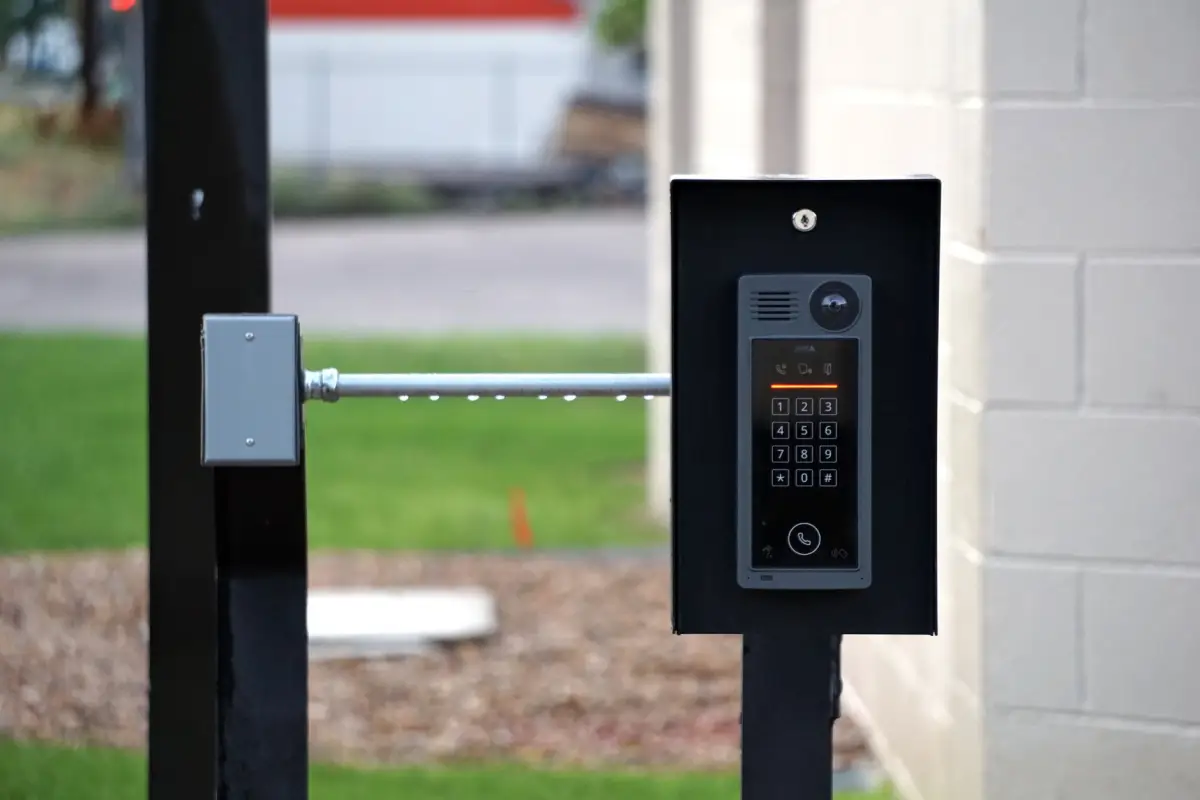
Custom & Ornamental Metal Gates
The city's landmark building is industrial rather than residential — the Peavey–Haglin Experimental Concrete Grain Elevator, built in 1899 and 1900 as the world's first concrete tubular grain elevator. There is no residential historic district here dictating a gate's appearance, and the housing stock is overwhelmingly late-1940s and early-1950s.
On stock like that, restraint reads better and costs less than ornament. Simple picket infill, a plain or gently arched top rail, and a finish that sits with the brick rather than against it usually beats forged scrollwork that takes fabrication hours to look borrowed on a modest post-war house. Where ornament is wanted, keep it above the splash line in the upper two-thirds of the leaf — that is where it survives and where it is seen — and specify a peaked or rolled top rail rather than a flat one that holds packed snow every February on a north-facing gate.

Metal Gate Repair in St. Louis Park, MN
Uniform housing age means uniform failure patterns, and the first question on any older gate is material condition. Surface rust comes off with a wire wheel and takes a zinc-rich primer and a topcoat. Section loss — where the steel has measurably thinned in a structural member, almost always the bottom rail or where a picket enters it — means the member is spent, and coating over it is decoration on a failing part.
After that the order is post movement, leaf deflection, hardware wear, alignment. Hennepin County is frost Zone II under Minnesota Rules 1303.1600 at a 42-inch minimum, and posts set seventy years ago to whatever depth was convenient have been lifting a little every spring since. The tell is a gate whose latch has been relocated more than once — that is a post problem being treated at the latch, and it will need relocating again.
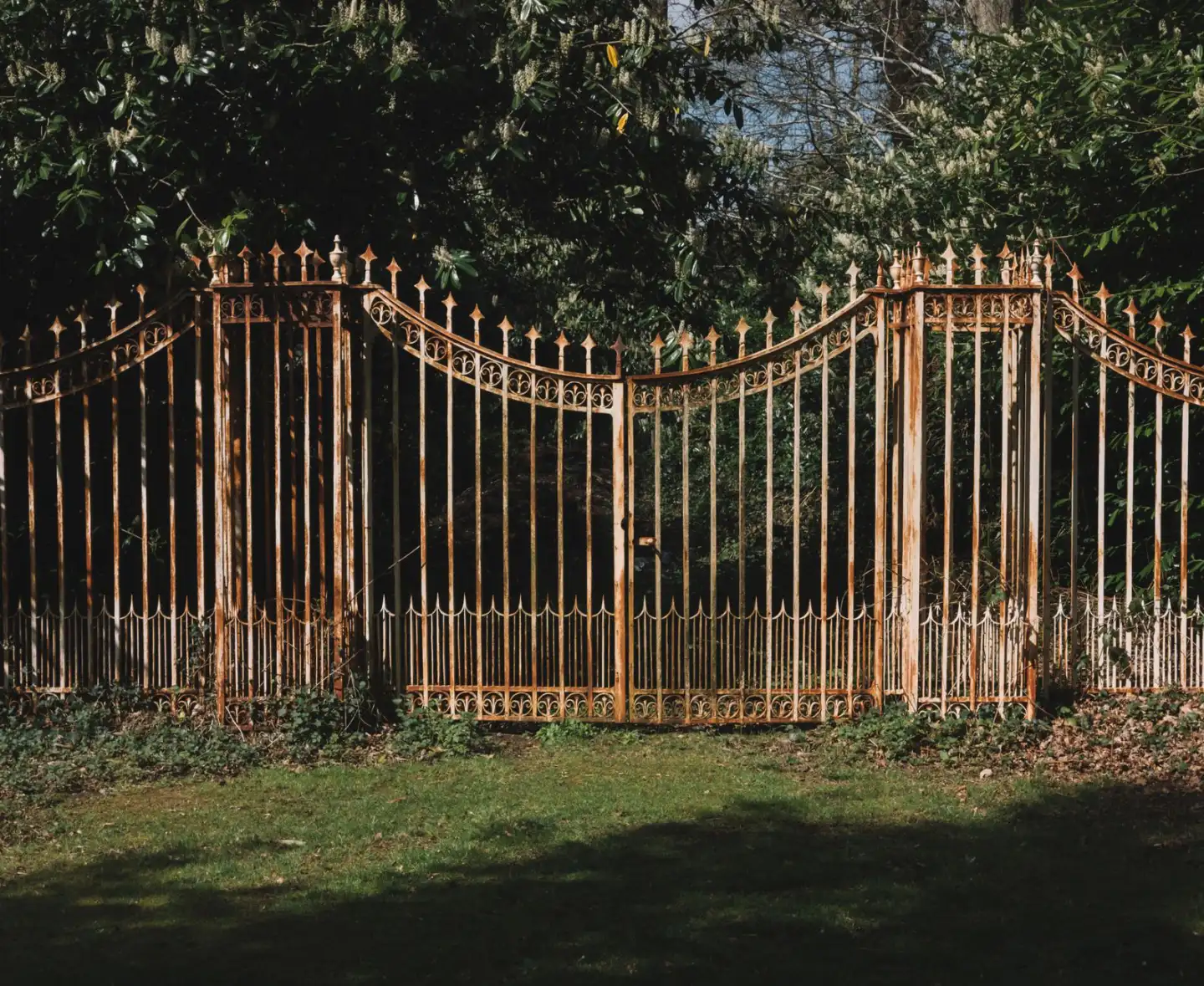
Specified for a 42-Inch Frost Line and 365,000 Tons of Road Salt
A phone number and a truck in the driveway don't make a company. Here's what's actually different about how a gate gets specified for a job in St. Louis Park, MN.
Footings Below the Frost Line
Minnesota Rules 1303.1600 puts Ramsey, Hennepin, Washington, Dakota and Anoka Counties in frost Zone II: 42 inches minimum. A post stopped short of that because the ground was frozen and nobody wanted to keep digging is a post that lifts, and a lifted post is a new gate rather than an adjustment.
Coating Specified Before Color
365,000 tons of road salt go down in the Twin Cities metro every year, and plow spray finds the bottom rail first. Hot-dip galvanized, or galvanized then powder coated, gets chosen against that exposure — the color chart comes after.
Safety Devices Tested by Obstruction
UL 325 and ASTM F2200 exist because automated gates injure people. Photo eyes and edge sensors get proven by physically blocking the gate at the closing edge and at the hinge pinch point before handover, not ticked off a list with the sensors still in the box.

Around St. Louis Park, MN
Peavey–Haglin Elevator
Built in 1899 and 1900 as the world's first concrete tubular grain elevator, and the city's clearest reminder that its landmark architecture is industrial rather than domestic.
The West End
The transit-oriented redevelopment district, where structured parking and tenant access control matter far more than anything about a gate leaf.
Lilac Way and Miracle Mile
Minnesota's first shopping centre from the late 1940s and its 1950 successor — shallow-lot commercial ground where enclosure gates behind the buildings have never had room for a swing arc.
When This Isn’t the Right Call
- If your opening is under about eight feet, a single stock swing leaf will usually do the job for a fraction of a custom build. Measure the clear opening in St. Louis Park before you spend anything.
- If you want a wood gate, this is the wrong page. A cedar gate hung on steel hinge posts is a legitimate answer and a different trade.
- If it is one sagging hinge on a four-foot walk gate, 11.9 miles each way is a poor trade for you and for whoever drives it. Call somebody on your own block and keep this page for the driveway.
- If the budget stops at a chain-link rolling gate, buy the chain-link rolling gate. It is an honest piece of hardware, and a custom gate value-engineered down to nothing satisfies nobody.
- If the existing gate sags but the frame and posts are still sound, a repair is almost always the cheaper and better answer than a replacement. Ask for that answer before you ask for a quote on a new gate.
Frequently Asked Questions
- Do you serve St. Louis Park, MN?
- Yes. St. Louis Park is 11.9 miles due west of St. Paul, and Hennepin County is inside the service area along with Ramsey, Washington, Dakota and Anoka.
- How deep do gate posts have to go in St. Louis Park?
- 42 inches. Minnesota Rules 1303.1600 places Hennepin County in frost Zone II, at a 3-1/2 foot minimum footing depth for frost protection — the same requirement as Ramsey, Washington, Dakota and Anoka. Northern Minnesota counties are held to 60 inches. A post stopped short of 42 lifts every freeze-thaw cycle until the gate stops closing square.
- Can a driveway gate fit on a 1950s St. Louis Park lot?
- Sometimes, and often not in the form people picture. A double swing pair on a single-width drive puts a leaf over the sidewalk at full travel. What fits is a single leaf swinging inward where there is depth behind the opening, a slide gate along a cleared back-run, or a cantilever gate where there is no back-run. If none of those work, a well-built walk gate in the fence line solves the actual problem for a fraction of the money — and that is a legitimate outcome, not a failed sale.
- How do I compare two gate quotes fairly?
- Three lines separate them. Footing depth, stated as a number rather than implied. Coating, stated as a system — powder coat over zinc-rich primer is not the same as powder coat over bare steel, and neither is a hot-dip galvanized duplex system. And on an automated gate, whether the UL 325 entrapment-protection devices are itemised rather than assumed. A quote that leaves all three vague is cheaper for a reason.
- What does a metal gate cost in St. Louis Park?
- HomeAdvisor's 2025 national data puts a manual driveway gate at $1,500 to $4,000 installed and an automatic one at $2,500 to $5,000, averaging $3,160, within an overall $750 to $11,000 range. Those are national figures for the gate and its hardware. They exclude the 42-inch Zone II footings Minnesota requires and the power run out to an operator, and on a tight post-war lot they exclude whatever access to the post locations adds.
Learn More
- Minnesota Rules 1303.1600 — Footing Depth for Frost Protection — the state rule placing Ramsey, Hennepin, Washington, Dakota and Anoka Counties in Zone II at a 42-inch minimum footing depth
- American Galvanizers Association — Duplex Systems — the technical basis for the 1.5 to 2.3 times service-life figure for powder coat over hot-dip galvanizing
- Minnesota Pollution Control Agency — Chloride and Winter Salt — the agency's own accounting of how much road salt goes down across the Twin Cities metro each winter, and where it ends up
Need a Metal Gate in St. Louis Park, MN?
Tell us what’s going on and get an immediate on-site quote — no charge for the estimate, and no obligation to book it.
Get My Free Estimate