
Driveway Gates in St. Paul, MN — Residential & Commercial Entrance Gates
Slide or swing gets decided by the ground, not the brochure. Back-run, grade and swing radius are measured on site before anything is drawn.
Driveway Gates in St. Paul, MN
St. Paul Elite Metal Gates is your local resource for driveway gates, automatic gate operators, security gates and ornamental iron fencing throughout St. Paul and Ramsey, Hennepin, Washington, Dakota and Anoka Counties. We work with experienced gate fabricators and installers who build for a climate that swings 120 degrees between July and January.
Whether a driveway gate should slide or swing is answered by the driveway, not by preference. A swing gate needs an arc it can clear — no parked car, no rising grade, no curb return in the way. A slide gate needs a cleared back-run alongside the drive roughly as long as the opening, and on a V-track slide gate it needs an apron that stays clear of ice, because a track that packs with slush in January will refuse to roll no matter how good the operator is.
Most St. Paul lots make that decision for you. A Highland Park alley approach with four feet of plow berm against the latch post rules out a swing gate that opens outward. A narrow Merriam Park lot with the fence tight to the house rules out the back-run a slide gate needs. Cantilever gates carry no ground track at all, which solves the ice problem and costs more, and that trade is usually the real conversation.
What’s Included in a St. Paul Driveway Gates Quote
- Clear-opening measurement at the finished post faces, plus grade change across the drive and approach slope
- Slide-versus-swing determination based on actual back-run, swing radius and where snow gets pushed
- Frame specification: 2x2 square tube or heavier, infill type, and latch-side diagonal bracing on long leaves
- Hinge and latch post sizing to finished leaf weight, or roller carriage and track layout on a slide gate
- Footings below the 42-inch Zone II frost depth, sonotube and concrete collar, posts set plumb and re-checked
- Coating specification appropriate to the gate's distance from a salted street
- Operator provisions — conduit sleeve, pad location and power run — whether automation goes in now or later
- Safety hardware where the gate is automated: photo eyes, edge sensors and the entrapment protection UL 325 requires
- St. Paul DSI fence permit coordination where the gate forms part of a fence line
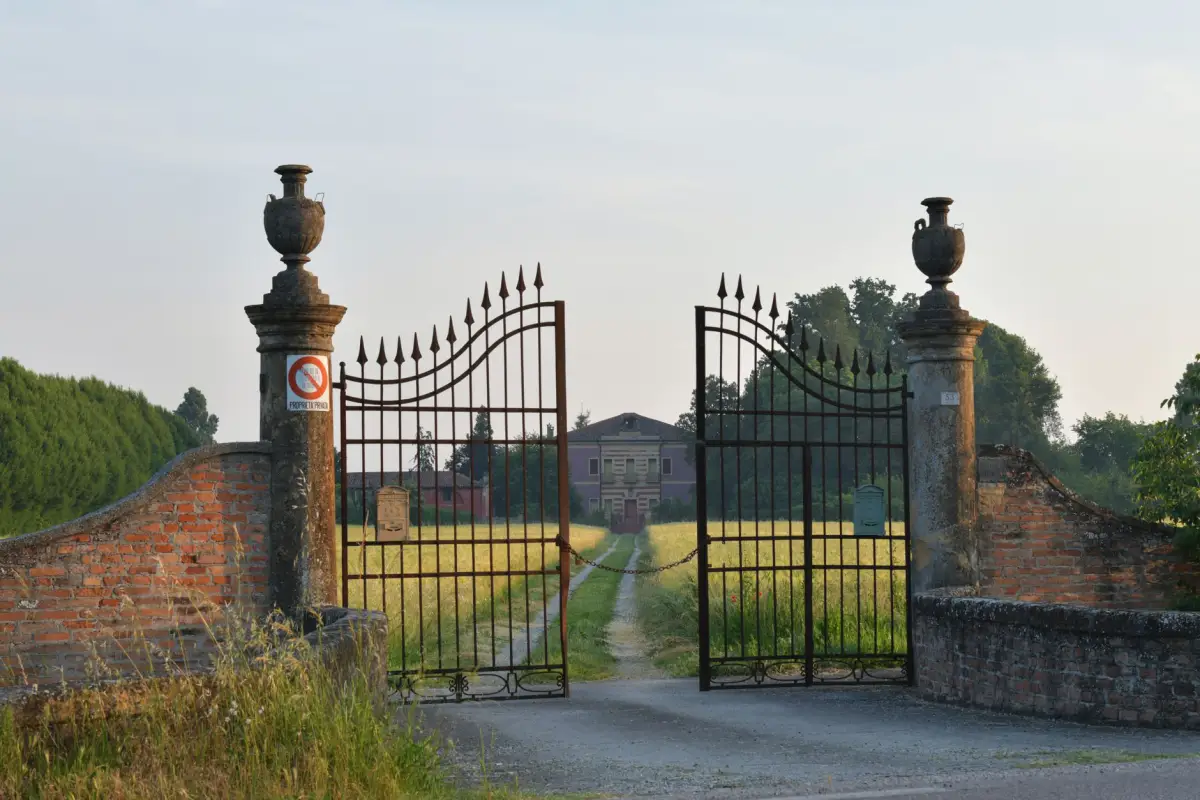
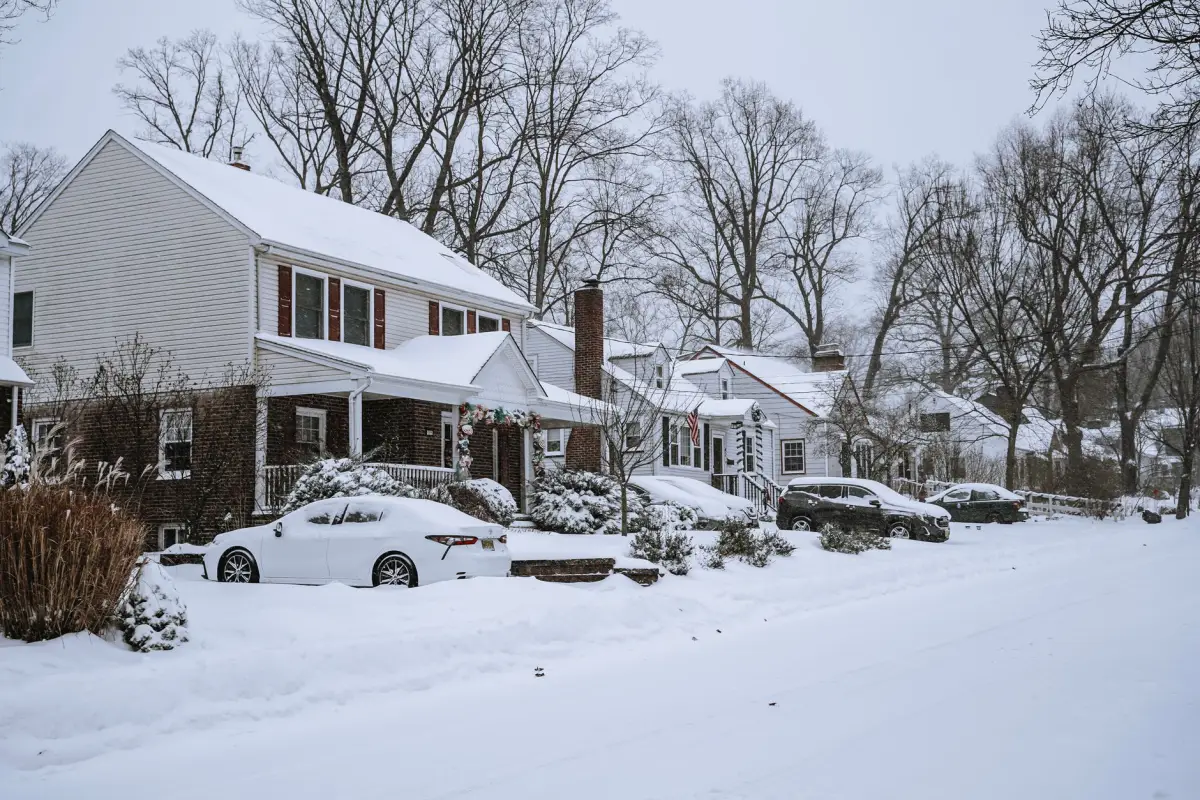
Driveway Gate Installation in St. Paul, MN
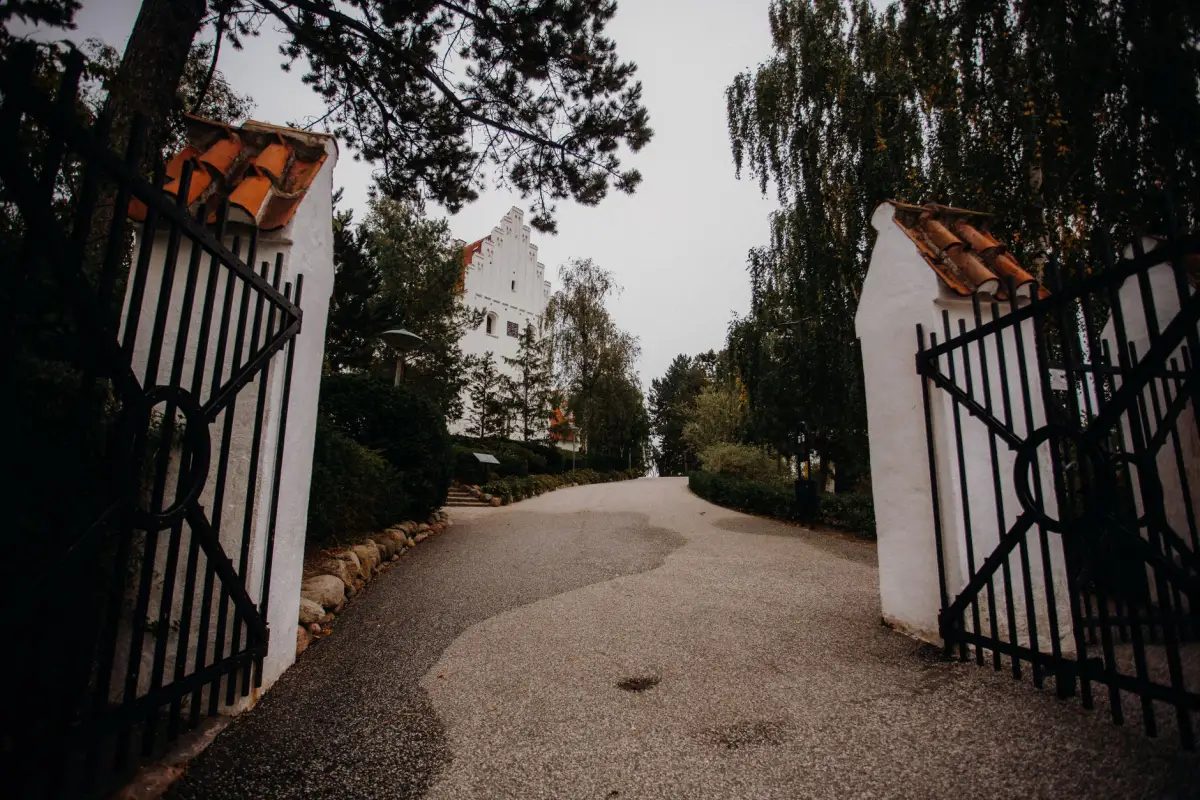
Custom Metal Driveway Gates
A driveway gate is the largest single piece of moving metal most properties will ever own, and the width is what drives every other decision. Under about 12 feet, a single leaf is usually simplest. Between 12 and 16, a double pair splits the weight and shortens the swing arc, which matters when the drive is short and the street is close. Past 16 feet, weight and deflection start pushing toward a slide gate or toward aluminum. Custom matters here because openings are rarely the round number people assume — a measured opening of 13 feet 4 inches gets a gate built to 13 feet 4 inches, not a 14-foot gate wedged in with the hinge post pushed into the boulevard. The other custom decision is what the gate looks like from the street. Along Summit Avenue and through Crocus Hill, matching the existing ironwork and the pier spacing is most of the design brief; in Woodbury and Eagan, a horizontal-slat aluminum leaf reads correctly against newer architecture.
Automatic Driveway Gates
Automating a driveway gate changes what the gate has to be. A manual gate only has to survive being pushed; an automatic gate has to survive being driven thousands of cycles by a motor that does not notice resistance until something breaks. That means a stiffer frame, a heavier hinge post, a footing that will not shift, and a leaf that swings freely through its whole arc with no rub anywhere. It also means safety hardware, which is not optional: ANSI/CAN/UL 325 requires two independent entrapment-protection devices at every entrapment zone, with the operator's inherent reversing system counting as one of the two. In practice that is photo eyes and edge sensors, and they are the first things left in the box on a bad install. The other planning item is power. If the operator sits on the far side of a 40-foot conduit run, that trench is far cheaper before the driveway is finished than after.
Sliding Driveway Gates
A slide gate is the answer where there is no room to swing — a short drive, a rising approach, a gate that would otherwise open into traffic on West 7th. The requirement is a clear back-run alongside the drive roughly the length of the opening, and that back-run has to stay clear year round, including when the plow has pushed a berm against the fence line. V-track slide gates run on a ground track and are the economical version; they are also the ones that quit in January, because the track fills with slush, freezes, and the gate simply will not roll. A gate that worked fine in October and quit in January did not break. It found the ice. Cantilever slide gates carry the leaf on roller carriages at the posts with no ground track at all, which removes the freezing problem, needs a longer counterbalance tail, and costs more up front.
Swing Driveway Gates
Swing gates are simpler, cheaper and quieter than slide gates, and they are the right answer whenever the geometry allows. The geometry is the catch. The gate needs a clear arc through its full travel — no parked vehicle, no garbage cart, no snow pile — and it needs the ground to fall away from or stay level through that arc, because a drive that rises toward the house will stop a gate that swings inward halfway through. Swinging outward toward the street has its own problem: on a short drive, a leaf that opens outward can reach the sidewalk, which is a code and a liability question rather than a preference. Where grade is the obstacle and space is not, hanging the gate higher and raking the bottom rail buys clearance. Where neither works, that is the conversation that ends in a slide gate.
Single & Double Driveway Gates
A single leaf has one hinge post to get right and one thing to maintain, and every pound of the gate hangs off that one post. Deflection grows fast with length, which is why a long single leaf needs a latch-side diagonal brace and why a long single leaf that never got one is the classic sagging gate — the free end drops, the latch stops meeting the keeper, and the gate drags a scar into the asphalt. A double pair halves the leaf length, halves the load per post, and gives you a drop rod or cane bolt in the center to carry the meeting stiles. The trade is two of everything: two hinge posts, two operators if it is automated, two things to align. On openings past about 12 feet, a double pair is usually the better structure even though it is the more complicated one.
Slide vs. Swing on a St. Paul Driveway
Swing gate
Cheaper, quieter, fewer moving parts, no ground track to ice up. Needs a clear arc and forgiving grade. First choice whenever the driveway allows it.
V-track slide gate
Works where there is no swing room, needs a back-run about as long as the opening. The ground track collects slush and freezes, which is the single most common winter service call on this style.
Cantilever slide gate
No ground track, so nothing to freeze. Carries the leaf on roller carriages with a counterbalance tail, which means it needs even more clear back-run than a V-track gate and costs more up front.
Signs You Need Driveway Gates
- The drive opens directly onto a busy street and you want vehicles stopped before the sidewalk rather than after it
- Deliveries, contractors and turnarounds use your driveway as though it were public, and a physical stop is the only thing that changes that
- The property already has a fence line and the driveway is the one gap in it
- You are planning an automatic operator and want the gate frame and footings built to carry it from the start
- An existing driveway gate sags, drags or won't latch, and the hinge post has visibly moved
- Insurance, a rental agreement or a home business requires controlled vehicle access to the property
How Driveway Gates Works
- 1
Measure the opening, the back-run and the arc
Three site measurements decide the gate. Clear opening is taken at the finished post faces, which is not the same as the width of the asphalt. Grade change across the opening is taken with a level, because a fall of even three or four inches across a 14-foot drive determines whether a swing gate drags at one end and whether the bottom rail has to be cut on a rake. Then the arc and the back-run get walked: for a swing gate, the full travel path is checked against parked cars, garage doors, the curb return and where snow gets piled; for a slide gate, the clear run alongside the drive is measured and checked for obstructions that only exist in winter. This is also when the property line gets confirmed, since St. Paul requires the whole fence line to sit inside it rather than on it, and when power and conduit routing get sketched if automation is in the plan.
- 2
Choose the configuration and size the structure
Slide or swing, single or double, steel or aluminum — all four fall out of the measurements rather than out of a catalog. Leaf length sets the frame section and whether a latch-side diagonal brace is needed. Finished leaf weight sets the hinge post size and the footing diameter. Infill sets wind load: a solid privacy panel on an exposed lot in Shoreview needs materially more post than a picket gate of the same size, because the panel is a sail and the picket gate is not. If the gate is going to be automated, the operator class gets picked here too, against the leaf weight and the expected cycle count, and the frame gets specified to survive that duty rather than to merely hold still. Getting this order backwards — picking the gate first and discovering the structure afterward — is how a gate ends up sagging in its second season.
- 3
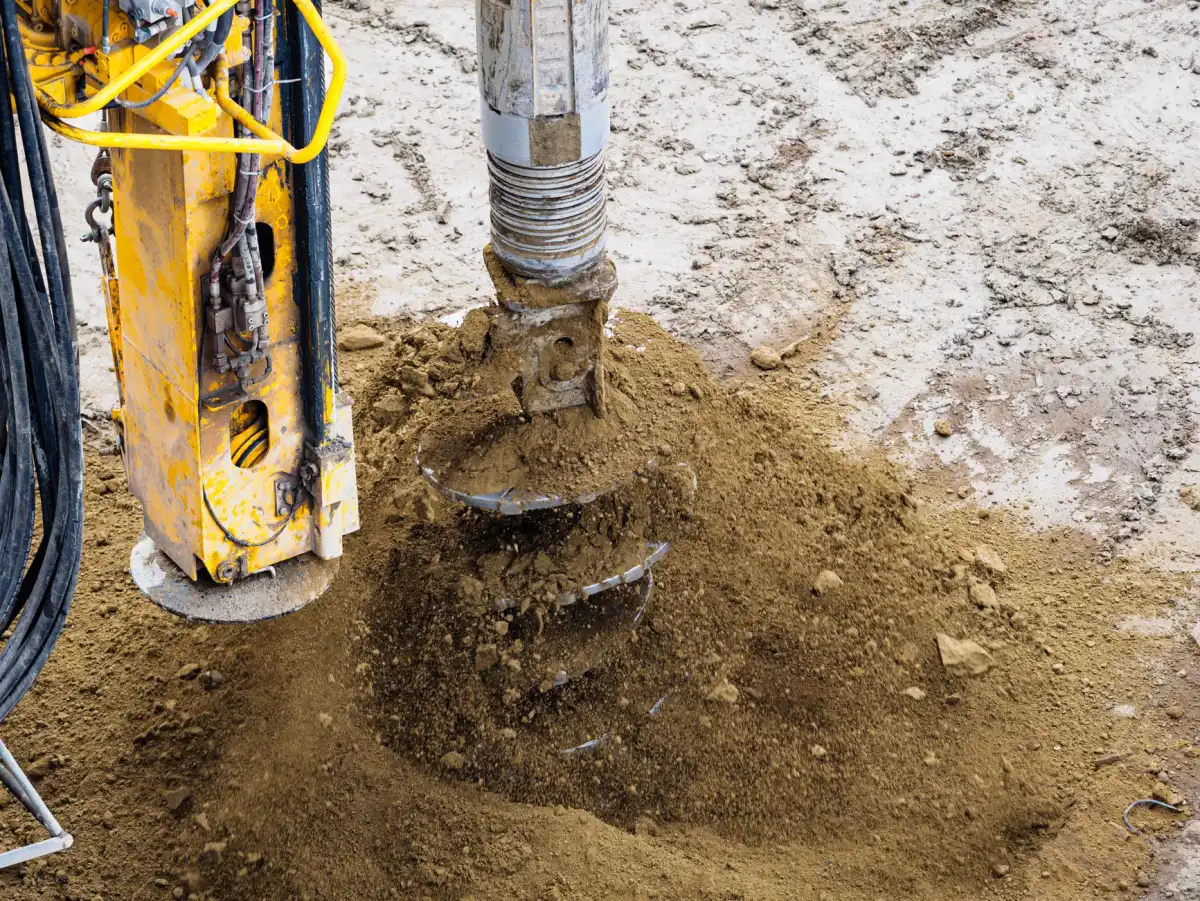
Set footings below frost, then hang
Footings go to a 42-inch minimum for Ramsey, Hennepin, Washington, Dakota and Anoka Counties under Minnesota Rules 1303.1600 — Zone II. Sonotube, concrete collar, posts set plumb and braced while the concrete cures. On a slide gate the track or the roller carriage posts get set to a string line, because a slide gate is far less forgiving of a post that is out by half an inch than a swing gate is. The gate is hung, swung or rolled through its complete travel, and the latch, drop rod or cane bolt is set with the gate resting in position rather than being held there. Every stop, keeper and catch gets located last, once the gate has settled onto its hinges. Then the whole thing gets re-checked after the first freeze-thaw, which is when a footing that was a little shallow announces itself.
- 4
Automate, wire and set the safeties
If an operator is going in, the pad location and conduit were roughed in before the concrete. The operator is mounted, travel limits are set at both ends, and soft start and soft stop are tuned so the gate is not slamming into its stops on every cycle — that setting alone is the difference between hardware that lasts and hardware that shakes itself apart. Then the safeties: ANSI/CAN/UL 325 requires two independent entrapment-protection devices at each entrapment zone, and the operator's inherent reversing system only counts as one of them, so photo eyes and edge sensors go in and get tested by actually obstructing the gate rather than by ticking a box. Loop detectors, exit wands, keypads and battery backup get commissioned last. Battery backup matters more here than in most markets, because a power failure during a Minnesota storm is exactly when nobody wants to be standing outside a gate.
What Do Driveway Gates Cost in St. Paul, MN?
- Opening width and whether the configuration is a single leaf, a double pair, a V-track slide or a cantilever slide
- Manual or automated, and if automated, the operator class the leaf weight and cycle count call for
- Material and infill — picket steel, horizontal-slat aluminum, or a solid privacy panel that has to be engineered for wind
- Coating: powder coat over zinc primer, or a hot-dip galvanized duplex system where the gate sits close to a salted street
- Footing conditions and access — clean clay versus fill, buried slab, tree roots or utilities under the post locations
- Distance from the power source to the operator, and whether that conduit run goes under an open or a finished driveway
- Access control at the gate: keypad, intercom, loop detector, exit wand or a full entry system
- St. Paul DSI fence permit fees where the gate is part of a fence line — $45 for the first 200 lineal feet, $15 per additional 100
Two line items surprise people, and both are underground. The first is the footing: a post hole that hits an old slab, a stump or an unmarked service line turns into hand digging. The second is the conduit run to the operator, which is trivial while the drive is open and a real excavation once it is paved. Both get identified standing in the driveway, which is why a driveway gate is quoted on site rather than from a photo.
What to Look for in a St. Paul Driveway Gate Installer
They walk the arc and the back-run
Slide versus swing is a site decision. Anyone who answers it before seeing the driveway is guessing, and the guess gets paid for in the second season.
Footing depth appears in the quote
42 inches is the Zone II minimum. A quote that does not mention footing depth is a quote you cannot compare to one that does.
Safety hardware is itemized, not assumed
Photo eyes and edge sensors are a UL 325 requirement on an automated gate, not an upsell. They should be listed on the estimate.
Winter is part of the plan
Where the plow pushes snow determines whether a V-track gate will roll in January. That belongs in the conversation before the track goes down.
Conduit gets roughed in either way
Even on a manual gate, a sleeve under the drive while it is open is cheap insurance against a future operator and an expensive trench.
They will talk you out of the wrong gate
A driveway with no back-run and no swing room needs a different answer, not a gate forced into it. Hearing that on the first visit saves everyone.
Residential & Commercial Driveway Gates
Residential
Single and double driveway gates for homes across St. Paul, Highland Park, Mendota Heights, Woodbury, Maplewood and Roseville — sized so the gate still clears with vehicles in the drive and snow on the ground.
Commercial
Yard, lot and service-entrance gates for businesses and property managers, built to commercial cycle counts. A gate that opens forty times a day needs a different frame, operator class and hardware schedule than one that opens twice.
When Driveway Gates Isn’t the Right Call
- If the driveway has no clear back-run and no room to swing, no driveway gate will work well there. A bollard, a chain or a rethink of the layout is the honest answer.
- If the opening is under about eight feet, this is a pedestrian gate question and a much smaller project.
- If the drive is shared with a neighbor or sits partly in an easement, sort the access agreement out first. A gate is the wrong place to test who has the right to be there.
- If you want a wood driveway gate, we are not the right resource. It is a legitimate choice and a different trade.
- If the property is outside Ramsey, Hennepin, Washington, Dakota or Anoka Counties, look for someone closer.
Frequently Asked Questions
- Should my driveway gate slide or swing?
- Swing, if the driveway allows it — it is cheaper, quieter and has no ground track to ice up. It needs a clear arc through full travel and grade that does not rise into the swing. Slide, if there is no arc but there is a clear run alongside the drive about as long as the opening. If neither exists, a cantilever slide gate carries the leaf without a ground track but needs an even longer back-run.
- How wide should a driveway gate be?
- Wide enough that a vehicle can enter without a three-point turn, which usually means at least 10 to 12 feet for a straight approach and more where the gate sits at an angle to the street. The real number is the measured clear opening at the finished post faces, taken on site. Beyond about 16 feet, a single leaf starts to deflect and the answer becomes a double pair or a slide gate.
- Why does my driveway gate sag and drag on the ground?
- Usually one of two things. Either the hinge post has moved — a footing shallower than the 42-inch Zone II minimum will heave with frost — or the leaf itself has dropped at the free end because it has no latch-side diagonal brace. The tell is where the gap changed: if the gate scrapes but the top of the hinge post still looks plumb, the leaf is deflecting. If the whole gate has tilted, the post is the problem.
- Do I need a permit for a driveway gate in St. Paul?
- If it is part of a fence line, yes. The City of Saint Paul requires a plan review and permit from the Department of Safety and Inspections for any fence, currently $45 for the first 200 lineal feet plus $15 per additional 100. Inspections are only required for fences over seven feet, pool fences and barbed wire. The line has to sit entirely inside your property line, which occasionally moves a gate post further in than people expect.
- Can a driveway gate open in winter with snow on the ground?
- A swing gate needs its arc kept clear, which in practice means someone shovels the arc, not just the drive. A V-track slide gate needs the track clear, and that is harder — packed slush freezes in the V and the gate simply will not roll. Cantilever slide gates avoid the problem entirely because there is no ground track. Where the plow throws a berm against the latch post is worth deciding before the gate style is chosen.
- Can I add an operator to my driveway gate later?
- Yes, if the gate was built for it. The frame, hinge post and footing have to carry powered cycling, and a manual gate that was never sized for that often needs a new hinge post. The larger cost is usually the conduit: running power to the operator is straightforward while the driveway is open and an excavation once it is paved. Sleeving under the drive during the original install costs very little.
Learn More
- DASMA — Vehicular Gate Operators and the ANSI/CAN/UL 325 Standard — the trade association's technical data sheet on operator classes and the two-device entrapment-protection requirement
- Minnesota Rules 1303.1600 — Footing Depth for Frost Protection — the state rule setting the 42-inch Zone II minimum that applies across the east metro
- Saint Paul DSI — Fence Plan Review, Permit and Inspections — current city permit requirements, fees, height limits and property-line rules
Need Driveway Gates in St. Paul, MN?
Tell us what’s going on and get an on-site estimate — no charge for the visit, and no obligation to book the work.
Get My Free Estimate