Gate Opener & Motor Repair in St. Paul, MN — Electric Gate Operator Service
Most dead openers are not dead. They are a drifted limit, a blocked photo eye, a tripped safety or a gate that got too hard to move — in that order of likelihood.
Gate Opener & Motor Repair in St. Paul, MN
St. Paul Elite Metal Gates is your local resource for gate opener repair, electric gate motors, automatic gate installation and access control throughout St. Paul and Ramsey, Hennepin, Washington, Dakota and Anoka Counties. We work with qualified local gate and access-control specialists who test the whole system before condemning the motor.
An operator that stops working is usually reporting a problem rather than having one. The single most common cause is that the gate itself got harder to move — ice in a slide gate's track, a seized roller, a hinge post shifted by frost — and the operator's current sensing did exactly what it was designed to do and backed off. Replacing the motor in that situation buys a new motor with the same problem.
The rest divides into a short list: a travel limit that has drifted so the operator no longer knows where closed is, a photo eye knocked out of alignment or fogged over, a failed control board, a dead battery in the backup, or a remote, keypad or receiver that has lost its pairing. Each has a specific test. Working through them in order is the difference between a service call and a replacement quote.
What’s Included in a St. Paul Gate Opener & Motor Repair Quote
- Full-system diagnosis: gate movement by hand, operator function, control board, safeties, power supply and entry devices
- Manual-release check of how much force the gate actually needs, since a heavy gate is an operator problem waiting to happen
- Travel limit and force-threshold testing and re-setting against the gate's real condition
- Photo eye and edge sensor alignment, cleaning and functional testing by physically obstructing the gate
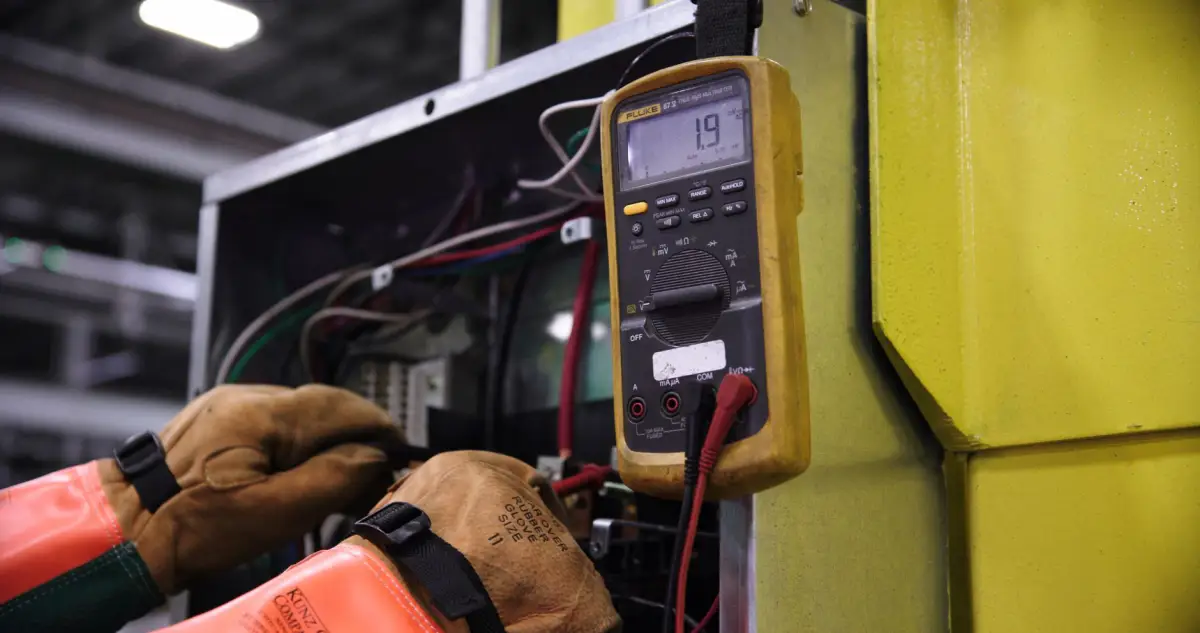
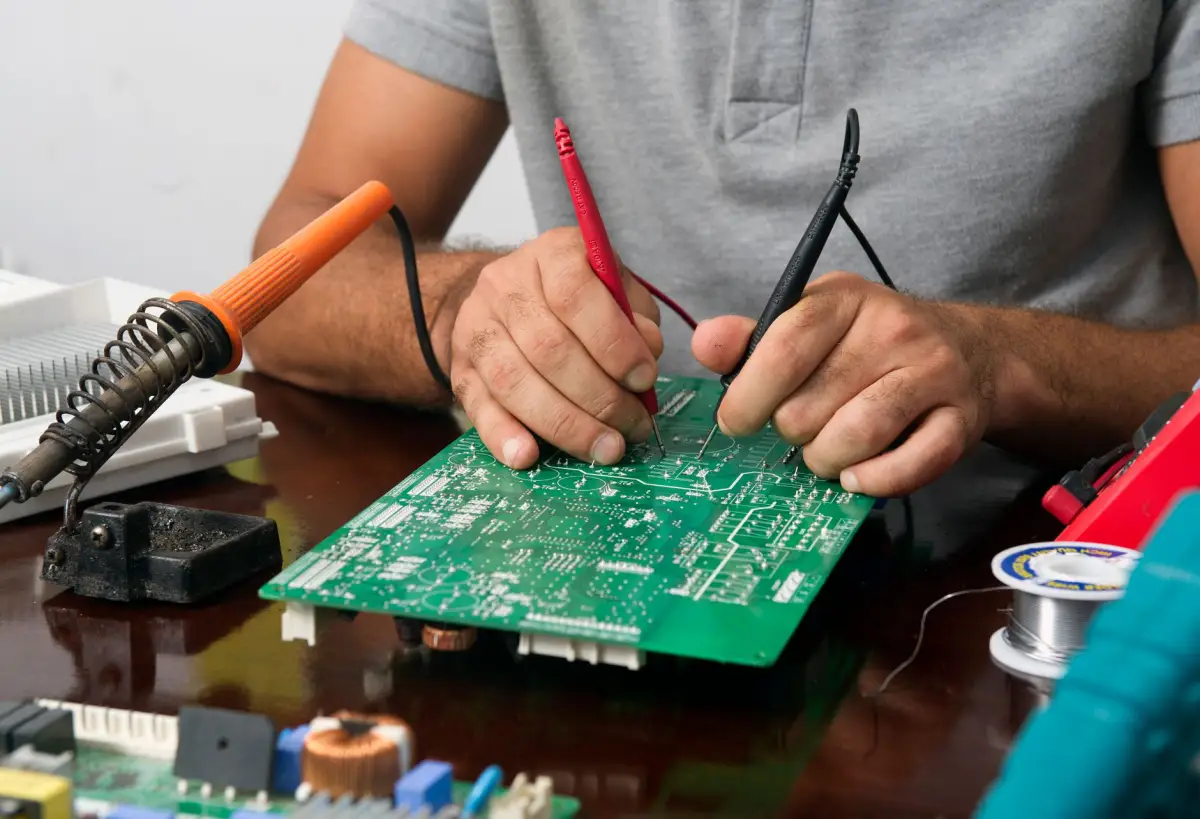
- Control board diagnosis — supply voltage, inputs, relays and any fault codes the board reports
- Battery backup load testing, since a battery that reads full voltage can still fail under load
- Remote, keypad, receiver and loop detector testing and re-programming
- A clear statement of what failed, why, and whether repair or replacement is the better call
Gate Opener & Motor Repair in St. Paul, MN

Electric Gate Motor Repair
Motor faults have a sound and a smell before they have a symptom. A gearbox running dry gets louder over weeks. A motor that hums but does not turn is usually a failed start capacitor rather than a burned winding, and that is a component-level repair rather than a replacement. A motor that runs but the gate does not move points at the drive coupling, a sheared key, a stripped gear or a chain that has jumped. Overheating and thermal cutout — the gate works, then stops after a few cycles, then works again once it cools — usually means the motor is being asked to move a gate that is too heavy or too stiff for it, which is either a gate problem or a class problem. That last one matters: a Class I residential operator installed on a drive with commercial traffic will overheat on schedule, and no repair fixes arithmetic.
Automatic Gate Opener Repair
The complaints in this category are the everyday ones. The automatic gate is stuck open, or stuck closed, or opens but will not close. It stops halfway and reverses. It works from the keypad but not the remote. It cycles when nobody asked it to. Each has a short diagnostic path. Stuck open is most often a photo eye seeing something — snow, a spider web across the lens, a knocked bracket — because the safeties are designed to hold the gate open rather than risk closing on an obstruction. Stops halfway is usually a drifted travel limit or an obstruction the gate meets at that point in its travel. Works from one device and not another isolates the fault to the receiver or that device rather than to the operator. Random cycling is often a loop detector that needs re-tuning or a stuck button on a remote in someone's coat pocket.
Gate Operator Repair
The operator is the assembly rather than just the motor, and the mechanical parts around the motor fail more often than the motor does. On a swing gate, articulated arms develop play at the joints and linear rams wear at the drive nut or leak at the ram seal; either shows up as a gate that no longer closes to the same position twice. On a slide gate, the drive chain stretches, the rack wears, the drive sprocket rounds off, and the gate starts to skip under load. Mounting is a repair item in its own right: an operator whose pad has settled or whose bracket has loosened fights the gate on every cycle and destroys itself doing it. This is also where a repair decision gets made honestly — a fifteen-year-old operator with worn drive components and no available parts is a replacement, and saying so early is better than three visits.
Gate Sensor & Safety System Repair
Photo eyes and edge sensors are the most-touched and most-abused parts of the system, and they are also the ones that must not be worked around. ANSI/CAN/UL 325 requires two independent entrapment-protection devices at each entrapment zone, with the operator's inherent reversing counting as only one, so a failed photo eye is a compliance problem as well as an operating one. Common faults: lens fogged, iced or coated in road spray; the beam misaligned by a bump, a frost-heaved post or a mower; wiring damaged where it runs across the drive; a reflector knocked or dirty on a reflective-type eye. Edge sensors fail from physical damage and from moisture ingress at the terminations. The wrong repair, and the one we will not do, is bypassing a sensor or turning force sensitivity down until the nuisance trip stops. That removes the protection instead of fixing the cause.
Remote, Keypad & Control Repair
The entry side has its own failure list and it is usually the cheapest part of the system to put right. Remotes lose pairing after a power event or a board replacement, and their batteries fail faster in cold — a transmitter that works indoors and not at the gate in January is often just a tired cell. Keypads suffer from moisture ingress at the backplate, worn or stuck buttons, and codes nobody remembers setting; a keypad that has stopped responding entirely is frequently a wiring or supply fault at the gooseneck rather than a dead unit. Receivers lose range as antennas corrode at the connection or get repositioned behind a masonry pier that blocks the signal. Loop detectors drift out of tune, trigger on nothing, or stop detecting after the drive has been resurfaced and the loop cut. Card readers, intercoms and multi-tenant entry systems are covered on the access control page.
Signs You Need Gate Opener & Motor Repair
- The gate opens but will not close, or closes and immediately reverses
- The operator hums or clicks but the gate does not move
- The gate stops partway through its travel, in the same place each time
- It works from the keypad but not the remote, or from neither
- The motor runs for a few cycles and then stops until it has cooled
- The gate is much harder to move by hand on the manual release than it used to be
- A photo eye light is off, flashing, or the lens is fogged, iced or splattered
- The gate stopped working after a power cut and the backup battery does nothing
How Gate Opener & Motor Repair Works
- 1
Release the operator and move the gate by hand
The first test costs nothing and answers the most important question. The operator is put on manual release and the gate is moved through its full travel by hand. If it is stiff, binds at a point, drags, or takes real effort, the fault is the gate rather than the opener — a seized roller, ice in the track, a hinge post shifted by frost, a leaf that has dropped. That gets fixed first, because an operator installed behind a stiff gate will fail again on the same schedule no matter how new it is. If the gate moves freely with one hand along its whole travel, the fault is in the electrical or mechanical side of the operator and the diagnosis moves indoors to the control box. Skipping this step is how a perfectly good motor gets replaced and the new one fails the same winter.
- 2
Check power, safeties and limits before the board
Supply voltage is measured at the board rather than assumed from the fact that a light comes on — voltage drop over a long conduit run is a real fault mode at the end of a 40-foot drive, and it shows up as an operator that works in summer and struggles in cold. The backup battery is load tested, since a battery that reads full at rest can collapse under the surge of a start. Then the safeties: photo eyes are checked for alignment, lens condition and indicator state, and edge sensors are checked for continuity and moisture at the terminations, because a tripped safety holds the gate open by design and reads to the owner as a broken opener. Travel limits are checked last in this group, since a limit that has drifted explains a gate stopping short far more often than a board fault does.
- 3
Diagnose the board and the drive train
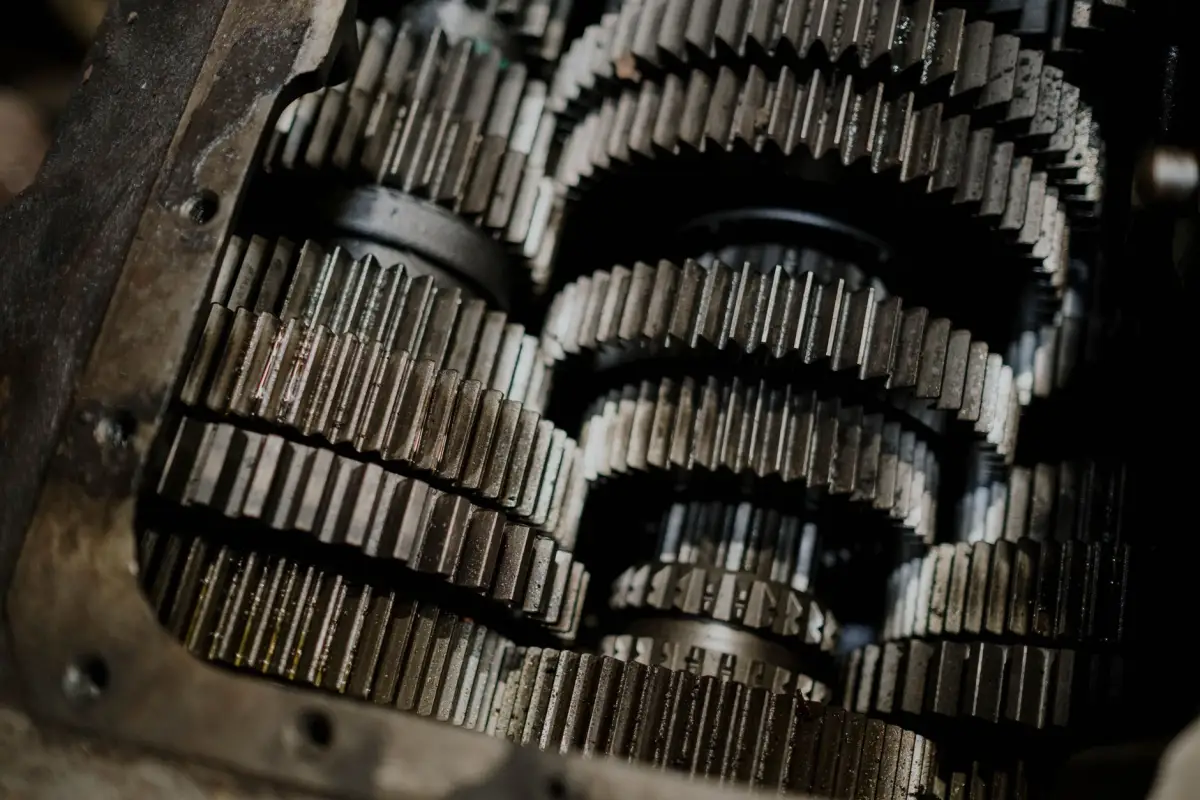
If power, safeties and limits check out, the fault is on the board or in the mechanism. Most modern boards report fault codes, and reading them saves a great deal of guessing — an overcurrent code points at the gate, an obstruction code at the safeties, a limit code at the switches. Inputs are tested by triggering each device in turn to see whether the board sees it, which isolates a dead keypad from a dead input. Relays are checked for chatter and contacts for pitting. On the mechanical side, drive chains are checked for stretch, racks and sprockets for wear, arm joints for play, and ram seals for leakage. Motors that hum without turning get a capacitor test before anything else, because a failed start capacitor is a common and inexpensive fault that gets misread as a dead motor.
- 4
Repair, re-commission and re-test the safeties
Once the fault is corrected, the whole system is re-commissioned rather than just the part that was replaced. Travel limits are re-set at both ends with the gate at rest. Force and current-sensing thresholds are set against the gate's actual condition — high enough to avoid nuisance reversals in a gust or a light frost, low enough that the gate backs off from something solid — and if the gate needed the thresholds raised, that is recorded as a finding rather than quietly accepted. Soft start and soft stop are re-tuned. Then the safeties are tested by physically obstructing the gate mid-travel at each entrapment zone and confirming it stops and reverses, which is the only test that proves anything. Remotes, keypads and loop detectors are re-paired and re-tuned last, and the manual release is demonstrated again.
What Does Gate Opener Repair Cost in St. Paul, MN?
- Whether the fault is in the gate, the operator's electronics, or the mechanical drive train
- Component-level repair versus assembly replacement — a start capacitor and a gearbox are very different numbers
- Operator age and parts availability, since older units often have no supported replacement parts
- Whether the operator was the wrong class for the traffic, which makes replacement rather than repair the real answer
- Photo eye, edge sensor and wiring repairs, including cable runs damaged where they cross a driveway
- Battery backup replacement and any power-supply corrections such as voltage drop over a long run
- Entry device work: remotes, keypads, receivers, loop detectors and re-programming
- Whether gate repairs are needed first, which moves part of the work onto the metal gate repair side
The number that decides most gate opener quotes is age. A recent operator with a failed capacitor, a drifted limit or a dead battery is an inexpensive fix. A fifteen-year-old unit with worn drive components and no available parts is not a repair, and paying for one is paying to be back here next season. Where the operator was undersized for the traffic from the start, the correct quote is a replacement at the right class rather than another repair.
What to Look for in a St. Paul Gate Opener Repair Company
They move the gate by hand first
The manual-release test is free and it decides whether the problem is the opener at all. Anyone quoting a motor without it is guessing.
Safeties are repaired, never bypassed
Turning force sensitivity down until a nuisance trip stops removes the protection instead of finding the cause. That is not a repair.
Fault codes get read out to you
Modern boards report what they saw. A technician who tells you the code and what it means is a technician who diagnosed rather than swapped.
The battery gets load tested
A backup battery that reads full at rest can still collapse under a start surge. Resting voltage is not a test.
They say when it is not worth repairing
An out-of-support operator with worn drive components is a replacement. Hearing that on visit one is worth more than two cheap repairs.
Force settings get re-checked seasonally
A threshold set in July may nuisance-trip in January. The right answer is investigating why the gate needs more force, not turning the sensitivity down.
Residential & Commercial Gate Opener & Motor Repair
Residential
Operator service on residential driveway gates across St. Paul, Highland Park, Mendota Heights, Woodbury, Eagan and Roseville — including the January wave of calls where the real fault turns out to be ice rather than electronics.
Commercial
Operator service on commercial and multi-tenant gates, where duty cycle is usually the underlying cause. Commercial gate operator work is covered in more depth on the commercial gate repair page.
When Gate Opener & Motor Repair Isn’t the Right Call
- If the gate is stiff or binds when you move it by hand on the manual release, the opener is not your problem yet. Fix the gate first.
- If what you want is the safety sensors bypassed so the gate stops nuisance-tripping, we are not the right resource. That is the one repair not on offer.
- If the operator is well out of support and the drive components are worn, a repair is money spent twice. Replacement is the honest recommendation.
- If the operator class was wrong for the traffic from the beginning, no repair changes that arithmetic.
- If the property is outside Ramsey, Hennepin, Washington, Dakota or Anoka Counties, find someone closer — operator faults tend to need a second visit.
Frequently Asked Questions
- Why is my automatic gate stuck open?
- Most often a safety device holding it there, which is the system working as designed. Check the photo eyes for a blocked, fogged, iced or misaligned lens, and look for anything in the beam path. After that, check whether the gate has become hard to move — put it on manual release and try it by hand. If it is stiff, the operator sensed resistance and stopped. A drifted travel limit and a control board fault are further down the list.
- My gate opener hums but the gate doesn't move. What is it?
- Usually a failed start capacitor, which is an inexpensive component-level repair rather than a motor replacement. The other candidates are a sheared drive key, a stripped gear, a chain that has jumped its sprocket, or a gate that has become physically stuck so the motor cannot break it loose. The manual-release test separates the last one from the rest in about thirty seconds.
- The gate worked fine until January. Why does it fail in winter?
- Because the gate got harder to move and the operator noticed. Ice packing a V-track slide gate's ground track is the classic version. Frost heave shifting a hinge post and changing the gate's geometry is the other. Cold also reduces battery capacity and stiffens grease in a gearbox. The right response is to find what changed about the gate rather than to raise the force threshold until the symptom disappears.
- Can you just turn the sensitivity down so it stops reversing?
- No. Force sensing and the entrapment-protection devices exist because automated gates injure people when they are set up wrong, which is why ANSI/CAN/UL 325 requires two independent protection devices at each entrapment zone. A gate reversing repeatedly is telling you something is in the way or something has got harder to move. The repair is finding that, not disabling the thing that noticed it.
- How long should a gate operator last?
- It depends far more on duty cycle than on years. An operator matched to its traffic and set up so it is not slamming into its stops on every cycle will run a long time; the same unit installed a class below what the site needs will fail early and repeatedly. Soft start and soft stop tuning, force thresholds set correctly, and a gate that moves freely are the three things that most affect how long it lasts.
- My remote works sometimes and not others. What is wrong?
- Start with the battery, which loses capacity in the cold — a transmitter that works from the porch and not from the street in January is usually just tired. After that, look at the receiver: a corroded antenna connection or an antenna that has been repositioned behind a masonry pier will cut range noticeably. If the keypad works and the remote does not, the fault is in the remote or the receiver rather than in the operator.
Learn More
- DASMA — Vehicular Gate Operators and the ANSI/CAN/UL 325 Standard — operator classes and the two-device entrapment-protection requirement behind why safeties are repaired rather than bypassed
- DASMA — ANSI/CAN/UL 325 and Gate Installations — how entrapment zones are identified on swing and slide gates, which determines where sensors have to work
- Minnesota Rules 1303.1600 — Footing Depth for Frost Protection — the frost-depth rule behind the geometry changes that show up every spring as operator faults
Need Gate Opener & Motor Repair in St. Paul, MN?
Tell us what’s going on and get an on-site estimate — no charge for the visit, and no obligation to book the work.
Get My Free Estimate