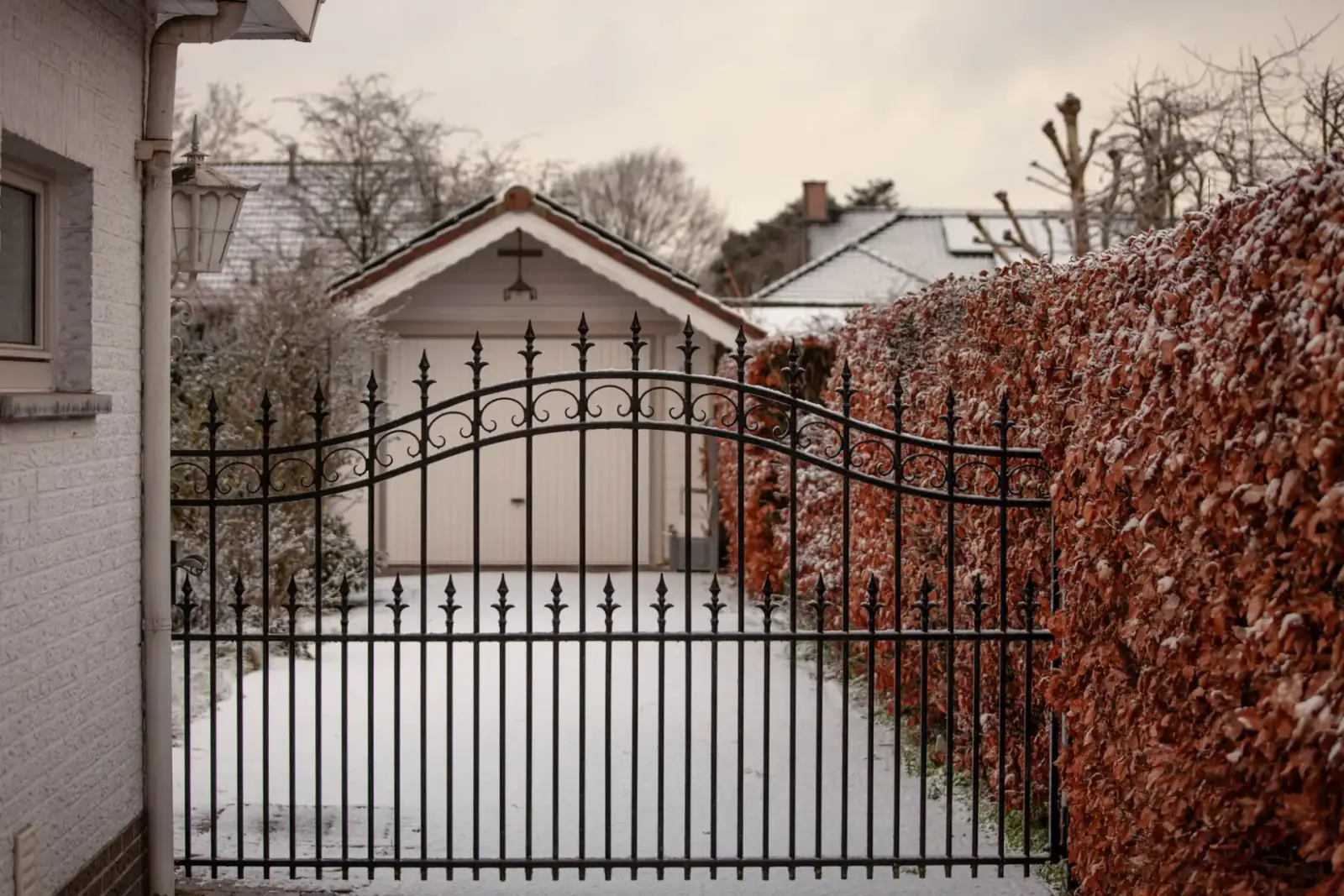
Custom Metal Gates in St. Paul, MN — Residential & Commercial Ironwork
Gates built to the opening you actually have, not to a catalog size that fits nobody. Material, coating, footing depth and operator decided on site, in that order.
Custom Metal Gates in St. Paul, MN
St. Paul Elite Metal Gates is your local resource for custom metal gates, driveway gates, security gates and ornamental ironwork throughout St. Paul and Ramsey, Hennepin, Washington, Dakota and Anoka Counties. We work with experienced gate fabricators and installers who build for a climate that swings 120 degrees between July and January.
A custom gate starts with a measurement, not a drawing. Most openings in this city are not square. A Summit Avenue carriage-house opening built in 1908 has settled at one end, a Highland Park alley approach slopes four inches across the drive, and a Woodbury cul-de-sac has a curb return that eats the swing radius. A catalog gate ordered to the nearest foot will bind on one of those and get blamed on the hardware.
Custom means the frame is cut to the measured opening, the hinge post is sized to the finished leaf weight, and the footing is dug to the depth the code and the soil call for rather than the depth the auger reached before someone got tired. Ramsey County sits in Zone II under Minnesota Rules 1303.1600, which sets a 42-inch minimum footing depth for frost protection. A gate post stopped at 30 inches will lift, and a lifted hinge post shows up as a gate that scrapes in April and won't latch in June.
What’s Included in a St. Paul Custom Metal Gates Quote
- On-site measurement of the opening at both posts, plus grade change across the drive — the number that decides swing clearance or slide back-run
- Material and coating specified in writing: mild steel, aluminum or true wrought iron, and whether it gets zinc primer and powder coat or a hot-dip galvanized base
- Frame drawing showing picket spacing, top rail profile, infill panel and any diagonal bracing on the latch side
- Hinge post and latch post sizing to the finished leaf weight, not to a standard post that happens to be in the truck
- Footings dug below the 42-inch frost line for Ramsey County, sonotube and concrete collar, posts set plumb
- Hardware schedule: hinges, latch, drop rod or cane bolt, and stop detail
- Provisions for automation if it is going in now or later — conduit sleeve under the drive, operator pad location, power run
- Permit coordination with St. Paul DSI where the gate is part of a fence line


Custom Metal Gate Design & Installation in St. Paul, MN
Custom Wrought Iron Gates
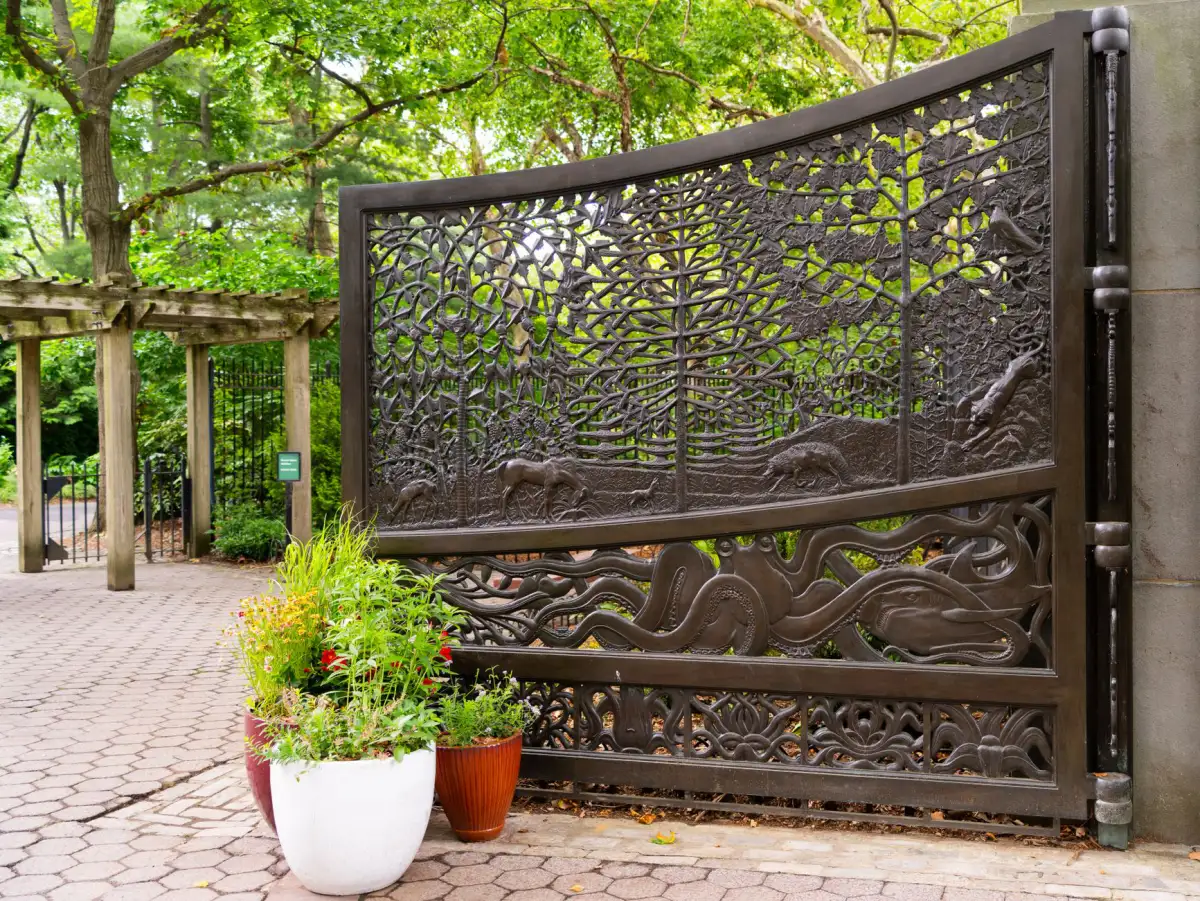
Almost everything sold as wrought iron in the east metro is mild steel, and that is fine — it welds cleanly, takes a coating well, and costs a fraction of the real thing. True wrought iron is a specific material with a fibrous slag structure, hand-worked at the forge, and it is a restoration and reproduction material now rather than a production one. It matters when you are matching an original gate on a Crocus Hill or Dayton's Bluff property where the existing ironwork is genuinely old and the repair has to disappear into it. It also matters at the invoice: pay steel prices for steel. A custom wrought iron gate here usually means forged scrollwork, hammered collars, mortise-and-collar joints instead of plain welds, and finials that were made rather than bought. Expect a longer lead time, because the work is at a forge and not at a chop saw.
Custom Steel Gates
Steel is the default for a reason. A 2x2 square tube frame with picket infill carries a fourteen-foot leaf without deflecting, welds solid at every joint, and can be repaired twenty years from now by anybody with a welder. The trade-off is corrosion, and in this metro that is not theoretical: the Minnesota Pollution Control Agency estimates about 365,000 tons of road salt goes down in the Twin Cities alone each winter, and the bottom rail of a driveway gate is exactly where the plow spray lands. That is a coating question, not a steel question. Zinc-rich primer under powder coat handles most residential gates. A duplex system — hot-dip galvanized first, then powder coated — is the answer where the gate sits close to a salted street, and per the American Galvanizers Association a duplex system lasts 1.5 to 2.3 times the combined life of the two coatings used separately.
Custom Aluminum Gates
Aluminum is the right call in two situations: a long single leaf where weight is the constraint, and a gate that will be automated on a light-duty operator. A sixteen-foot aluminum leaf can weigh less than half of the same gate in steel, which takes load off the hinge post, off the footing, and off the operator's gearbox. Aluminum also does not rust, which removes the bottom-rail problem entirely on a driveway that gets salted. The trade-offs are real. Aluminum is softer, so a gate that gets backed into dents rather than springs back. Welded aluminum needs a fabricator set up for it, and repairs are less casual than steel repairs. And on ornamental work it will not hold a forged detail the way iron does — cast aluminum scrollwork looks like cast aluminum scrollwork. For a modern horizontal-slat gate on a Woodbury or Eagan property, none of that is a drawback.
Decorative & Ornamental Metal Gates
Ornamental work is where a custom gate stops being a fence with a hole in it. Scroll panels, cast rosettes, spear or fleur finials, ring-and-collar work, laser-cut or plasma-cut infill panels with a designed motif — all of it is fabrication time, and fabrication time is most of the price difference between a plain picket gate and an ornamental one. Two practical notes for this climate. Horizontal ledges collect ice, so a top rail with a flat upper face on a north-facing Como Park entrance will carry a load of packed snow every February; a peaked or rolled top sheds it. And detail welded to the bottom third of a driveway gate is in the salt spray zone, which is a coating and a maintenance decision before it is an aesthetic one. Ornament belongs above the splash line where it can be.
Modern & Traditional Metal Gate Designs
Traditional here means the vocabulary that matches the housing stock: arched top rail, spear-top pickets, scroll infill, stone or brick piers, and a gate that reads as though it went in with the house. On Summit Avenue, Grand Avenue and through Merriam Park that is usually the right answer, and matching an existing fence run or a neighboring property's ironwork is half the design brief. Modern means horizontal slat infill, a flat top rail, wide picket spacing or solid privacy panels, and often aluminum instead of steel. Both directions have the same structural requirements underneath — a braced frame, a hinge post sized to the leaf, and a footing below 42 inches. Where they differ is wind load. A solid privacy panel gate is a sail; a slatted or picket gate is not. On an exposed lot in Shoreview or on a west-facing drive, that changes the post size and the operator class before it changes anything you can see.
Mild Steel vs. True Wrought Iron vs. Aluminum
Mild Steel
Strongest per dollar, welds and repairs easily, holds ornamental detail well. Will corrode without a maintained coating, and the bottom rail goes first. The default for driveway gates in this metro.
True Wrought Iron
A restoration and reproduction material, not a production one. Forged, collared and hand-worked. Correct when matching genuinely old ironwork on a historic property. Longer lead time and a real price premium — and worth checking you are actually buying it.
Aluminum
Roughly half the weight of steel and it does not rust, which takes load off the hinge post, the footing and the operator. Softer, so it dents rather than springs back, and it will not carry forged detail. Strong choice for long leaves and light-duty automation.
Signs You Need Custom Metal Gates
- The gate you want does not exist in a standard size — your opening measures 13 feet 4 inches and every catalog gate is 12 or 14
- Your opening is out of square or the drive slopes across it, and a rectangular gate will bind at one end
- You are matching existing ironwork on an older St. Paul property and a stock picket gate will look wrong next to it
- The gate needs to carry an operator now or later, and the frame has to be sized for the load before anything else
- A previous gate sagged, dragged or pulled its hinge post, which is a frame and footing problem rather than a hardware problem
- You want a specific infill — privacy panel, horizontal slat, ornamental scroll — that changes the wind load and the post sizing
How Custom Metal Gates Works
- 1
Measure the opening and the ground it sits on
Two numbers decide most of the design, and neither is the one people quote over the phone. The first is the clear opening measured at the finished post faces, not curb to curb. The second is the grade change across the drive, taken with a level and a story pole, because a swing gate on a drive that falls four inches from one side to the other will drag on the low end unless the bottom rail is cut on a rake or the gate is hung high enough to clear. The visit also establishes swing radius against parked cars, garage doors and the curb return, whether there is enough clear back-run for a slide gate, where the property line actually runs (St. Paul requires the fence line to sit entirely inside it), and where power could come from if automation is on the table. Soil comes up here too: a footing in the sand pockets along the river bluff behaves differently from one in the heavy clay across most of Ramsey County.
- 2
Specify material, coating and structure
Material first, then coating, then structure — in that order, because each one constrains the next. Steel, aluminum or forged iron gets decided against leaf length, weight, automation plans and what the property already has. Coating gets decided against exposure: a gate set back on a Como Park lot has a different corrosion life than one whose bottom rail is eight feet from a salted street, and where the exposure is severe the answer is a duplex system rather than a heavier coat of the same paint. Structure follows from both. Leaf length sets the frame section, usually 2x2 square tube for residential work and heavier for long or solid-infill leaves. Solid panels catch wind and need more post. A latch-side diagonal brace is what stops a long leaf from dropping at the free end over its first few seasons, and it belongs in the drawing rather than being added later when the gate has already sagged.
- 3
Fabricate, then coat
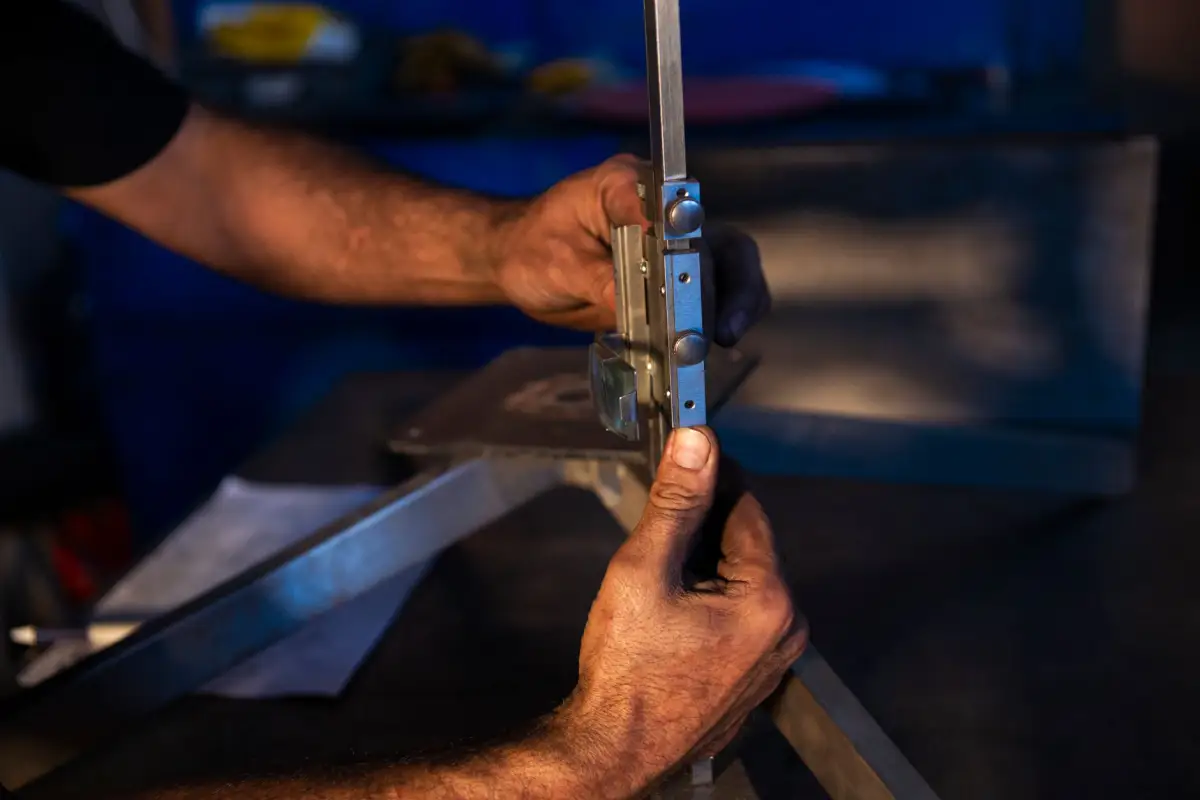
The frame is cut and welded to the measured opening, not to the nominal one. Joints are welded and ground where they show; ornamental work gets collared or forged rather than tacked. Then the whole gate is coated as one piece, after all fabrication is finished — this is the step that gets skipped when a gate is modified on site, and a bare cut end or a drilled hole made after coating is where corrosion starts. Powder coat over zinc-rich primer covers most residential gates. Hot-dip galvanizing followed by powder coat is the specification for high-salt exposure, and the American Galvanizers Association puts the service life of that duplex system at 1.5 to 2.3 times the sum of what the two coatings would deliver on their own, because the topcoat slows zinc consumption while the zinc eliminates the undercutting that makes paint peel off bare steel.
- 4
Set the posts and hang the gate
Footings go below the frost line: Minnesota Rules 1303.1600 puts Ramsey County in Zone II at a 42-inch minimum, and this is the single most common place a gate installation goes wrong, because the last foot of a post hole in October is the least pleasant foot to dig. Sonotube and a concrete collar, posts set plumb and braced while the concrete cures. The gate is hung, the swing or travel is checked through its full arc, and the latch and drop rod are set with the gate in its resting position rather than held there by hand. Then it gets re-checked after the first freeze-thaw season, because that is when a marginal footing tells on itself. If automation is going in, the operator pad, conduit and power run were roughed in before the concrete went down — retrofitting a conduit run under a finished driveway is the expensive version of that conversation.
What Do Custom Metal Gates Cost in St. Paul, MN?
- Leaf length and count — a single 10-foot leaf, a double 14-foot pair and a 20-foot slide gate are three different structures, not three sizes of the same one
- Material: aluminum, mild steel or forged wrought iron, in ascending order of cost per foot
- Coating specification — powder coat over zinc primer versus a hot-dip galvanized duplex system for high-salt exposure
- Infill and ornament: plain picket, horizontal slat, privacy panel, or forged and cast decorative work, which is mostly fabrication hours
- Footing conditions — a clean dig in clay versus hitting fill, old concrete, tree roots or utilities that force hand digging
- Whether automation is included now, roughed in for later, or not at all — conduit under a finished drive costs far more than conduit under an open one
- Site access for the crew and equipment: an alley approach in Payne-Phalen is a different day than an open Woodbury lot
- St. Paul DSI permit fees where the gate is part of a fence line — currently $45 for the first 200 lineal feet and $15 per additional 100
The number that moves a custom gate quote most is rarely the gate. It is the footing and the power. A post hole that hits an old slab or a forgotten service line turns a half-day into a full one, and pulling power to an operator on the far side of a 40-foot drive is trenching work before it is gate work. Both get established on the site visit, which is why a custom gate is quoted standing in the opening rather than over the phone.
What to Look for in a St. Paul Metal Gate Fabricator
They measure before they quote
A price given over the phone for a custom gate is a price for a gate that fits some other opening. Clear opening, grade across the drive and swing clearance are site measurements.
The coating is specified, not assumed
Ask what goes under the color. Zinc-rich primer, hot-dip galvanizing, or nothing at all are three very different answers in a metro that salts this heavily.
Footing depth is stated in writing
42 inches is the Zone II minimum in Minnesota Rules 1303.1600. It should appear in the quote, not be something you find out about the following spring.
The material is named accurately
Mild steel is a good material and there is nothing wrong with selling it. Selling it as wrought iron at wrought-iron prices is a different thing.
Automation is planned before concrete
Even if the operator is years away, the conduit sleeve and pad location cost almost nothing while the driveway is open and a great deal afterward.
They will tell you when custom is the wrong answer
Plenty of openings are well served by a stock gate. A fabricator who says so on the first visit is the one to keep the number for.
Residential & Commercial Custom Metal Gates
Residential
Driveway and walk gates for single-family properties across St. Paul, Maplewood, Roseville, Mendota Heights and the eastern suburbs — matched to the house rather than to a catalog, and sized so the gate still swings clear when there are two cars in the drive.
Commercial
Entrance gates, yard gates and enclosure gates for businesses and property managers, specified to the traffic volume the opening actually sees. Commercial cycle counts push the frame, the hardware and the operator class well past residential specifications.
When Custom Metal Gates Isn’t the Right Call
- If your opening is under about eight feet, a single stock swing leaf will usually do the job for a fraction of a custom build. Measure before you spend.
- If you want a wood gate, this is the wrong page. A cedar gate on steel hinge posts is a legitimate answer and a different trade.
- If the property is outside Ramsey, Hennepin, Washington, Dakota or Anoka Counties, we are not the right resource — you want someone whose crews are already driving past.
- If the budget stops at a chain-link rolling gate, buy the chain-link rolling gate. It is an honest piece of hardware and a custom gate that gets value-engineered down to nothing satisfies nobody.
- If the existing gate sags but the frame and posts are sound, a repair is usually the cheaper and better answer than a replacement.
Frequently Asked Questions
- How deep do gate posts have to go in St. Paul?
- 42 inches. Minnesota Rules 1303.1600 sets footing depth for frost protection by zone, and Ramsey County — along with Hennepin, Washington, Dakota and Anoka — falls in Zone II at a 42-inch minimum. Northern Minnesota counties are held to 60. A hinge post stopped short of that will heave, and a heaved hinge post is why a gate that closed fine in November scrapes the drive in April.
- Do I need a permit for a gate in St. Paul?
- If the gate is part of a fence, yes — the City of Saint Paul requires a plan review and permit from the Department of Safety and Inspections for any fence. The current fee is $45 for the first 200 lineal feet plus $15 for each additional 100. An inspection is only required for fences over seven feet, pool fences and barbed wire. Residential fence height is capped at 6 feet 6 inches, and the whole line has to sit entirely inside your property line, not on it.
- Is wrought iron actually better than steel for a gate?
- For a driveway gate, no. Mild steel is stronger per dollar, welds cleanly and is far easier to repair. True wrought iron earns its price on restoration work — matching genuinely old ironwork on a historic property, where the forged texture and collared joints have to disappear into what is already there. Most gates sold as wrought iron in this metro are mild steel, which is fine as long as the invoice reflects that.
- What coating holds up best against Minnesota road salt?
- A duplex system: hot-dip galvanized first, then powder coated. The American Galvanizers Association puts its service life at 1.5 to 2.3 times the combined life of the two coatings applied separately, because the topcoat slows zinc consumption while the zinc stops the undercutting that peels paint off bare steel. It matters here — the MPCA estimates roughly 365,000 tons of road salt is applied in the Twin Cities metro each year, and the bottom rail of a driveway gate is where the spray lands.
- How long does a custom gate take to build?
- Design and measurement usually take a visit and a revision. Fabrication depends on the work — a picket-infill steel gate is a shorter build than a forged ornamental one, which is at a forge rather than a saw. Installation is separate and weather-dependent, because footings mean concrete, and concrete in a St. Paul January is a scheduling conversation rather than a given.
- Can a custom gate be automated later?
- Yes, and it is much cheaper if the frame was designed for it. A gate built to carry an operator has the hinge post, footing and frame section sized for the load, plus a conduit sleeve run under the drive and a pad location picked while the ground was open. Retrofitting a gate that was never meant to move under power often means a new hinge post, and trenching a conduit run under a finished driveway is its own line item.
Learn More
- Minnesota Rules 1303.1600 — Footing Depth for Frost Protection — the state rule that puts Ramsey, Hennepin, Washington, Dakota and Anoka Counties in Zone II at a 42-inch minimum footing depth
- Saint Paul DSI — Fence Plan Review, Permit and Inspections — the city's own permit requirements, current fees, height limits and property-line rules for fences and the gates in them
- American Galvanizers Association — Duplex Systems — the technical basis for the 1.5 to 2.3 times service-life figure for powder coat or paint over hot-dip galvanizing
Need Custom Metal Gates in St. Paul, MN?
Tell us what’s going on and get an on-site estimate — no charge for the visit, and no obligation to book the work.
Get My Free Estimate